Shore study two
The 125,000-acre neighbor at the city line
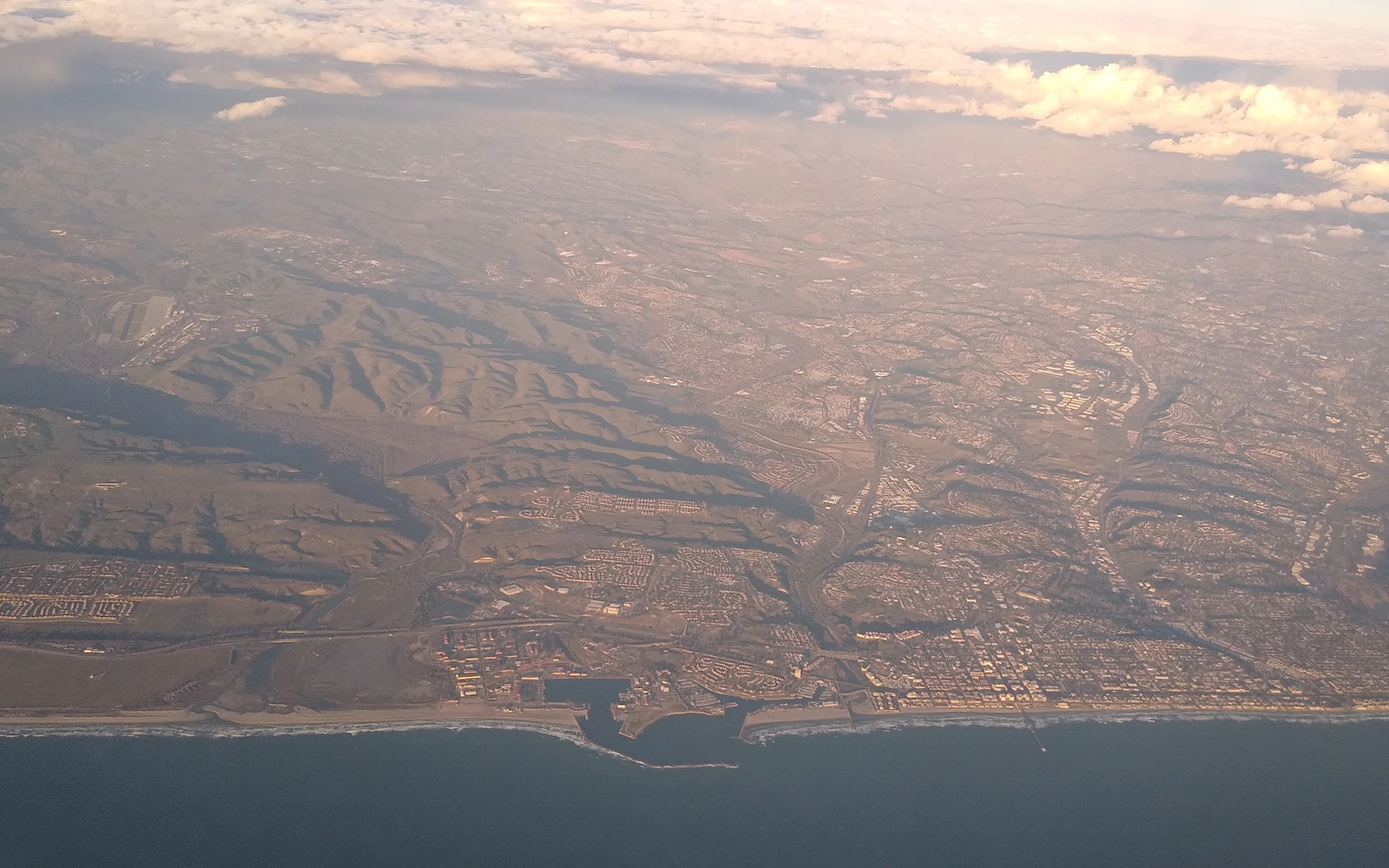
Oceanside’s northern neighbor is not another beach town. Marine Corps Base Camp Pendleton spreads across approximately 125,000 acres of northern San Diego County directly beside the city, with more than seventeen miles of Pacific shoreline of its own — a coastal expanse that explains why the developed beachfront ends so cleanly at the city limit in any aerial photograph.
The Department of Defense installation record dates the arrangement precisely. On March 10, 1942, the Department of the Navy announced the purchase of roughly 130,000 acres of ranch land for a West Coast training center, and by October 1944 the new base had been declared a permanent installation. It carries the name of Major General Joseph Henry Pendleton, a Marine officer who had long pressed for a large training ground on this coast.
The base’s present scale reads like a mid-size city. The same overview counts more than 42,000 active-duty personnel, more than 38,000 family members living in base housing, roughly 3,900 civilian employees, and more than 77,000 retired service members settled within fifty miles. Its stated mission is to house, train, and support the Fleet Marine Force on the West Coast, and its training grounds run from the surf line into the inland hills.
For Oceanside, all of that arithmetic is domestic. Orders bring families to the region on short timelines; some settle in base housing while thousands of others rent or buy across the fence in the city’s northern neighborhoods. The city’s own coastal planning documents describe Oceanside as a regional transportation crossroads served by Interstate 5 and two state routes, which is exactly how a base-adjacent household experiences it: as the commute.
A move like that reshuffles an insurance file all at once. A vehicle acquires a new garaging address, a new commute pattern, and sometimes a new driver in the household; a rented house near the fence line raises the renters-coverage question; a purchased one starts the homeowners conversation from scratch. Each of those is an ordinary policy fact, but they tend to change together and quickly, which is when details get missed.
The direction of the move matters less than its speed. A family leaving the area on a similar timeline faces the mirror image of the same list — an address change, a storage decision, perhaps a vehicle staying behind with a relative — and every one of those facts belongs in a conversation with the insurer before it becomes an assumption. Policies are written around declared facts, and a fast-moving household changes more of them in a month than a settled one changes in five years.
The steady move is to treat the relocation itself as the insurance event: confirm what the existing auto policy says about the new address and drivers before the boxes are unpacked, and ask how California’s required liability coverage compares with what the household carried in its last state. The state insurance department’s automobile guide lays out the required minimums and the optional protections worth weighing alongside them.
Base record: MilitaryINSTALLATIONS in-depth overview of Camp Pendleton (U.S. Department of Defense). City context: City of Oceanside Local Coastal Program grant application. Insurance reading: California Department of Insurance automobile guide.