Shore study three
A museum that keeps surfing’s paper trail
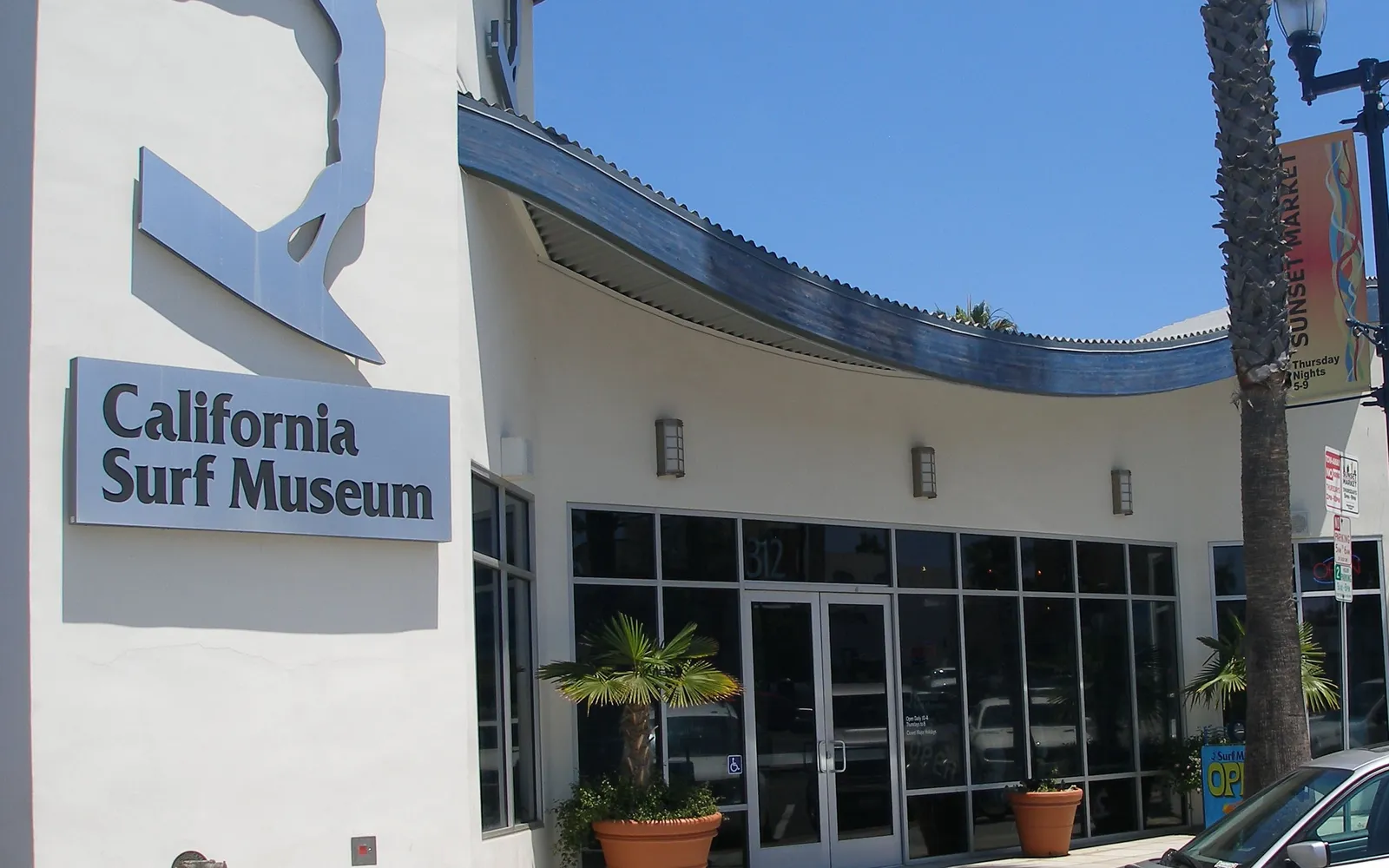
The California Surf Museum began in 1986, when ten founders organized a home for surfing’s artifacts and stories in a North County restaurant. The institution’s own history page lists the itinerant early years plainly: an Encinitas storefront, a move to Moonlight Plaza in 1988, a stretch in Pacific Beach beginning in 1989, and then the decisive arrival in Oceanside in 1991 at 308 North Pacific Street.
Two more Oceanside addresses followed — North Coast Highway in 1997, and finally 312 Pier View Way in 2009, a renovated building steps from the pier that the museum credits with tripling its space. Along the way the organization published Surfing in San Diego in 2007, which it describes as the first attempt to document the county’s surfing history, and built a collection running from early boards to digitized runs of surf magazines.
Today the museum operates as a 501(c)(3) nonprofit and describes its mission as serving as an international repository and resource center for the sport — capturing and preserving surfing’s art, culture, and heritage for future generations. The city’s coastal planning application returns the compliment, naming the museum among the cultural destinations that now draw visitors downtown alongside the beach itself.
What makes a small museum work is not square footage; it is record-keeping. Every board on the wall arrives with provenance — who shaped it, who rode it, what it meant — and the institution’s value lives as much in those documented particulars as in the objects. That discipline is worth copying at household scale, because an insurance conversation about belongings is, at bottom, a provenance conversation.
Households near this coast tend to own exactly the kinds of things that are easy to undercount: boards and wetsuits, bikes, cameras, instruments, a shelf of inherited keepsakes. A homeowners or renters policy covers personal property up to stated limits, and certain categories can carry specific sub-limits or call for scheduling. None of that can be sorted out after a loss; it has to be read and asked about beforehand.
Valuation is the second half of that reading. A policy that replaces belongings at today’s purchase price treats a nine-year-old board differently than one that subtracts depreciation first, and the gap between those two answers is widest for well-used gear. An item with genuine collector value — the very category this museum exists to certify — may be worth more than any formula suggests, which is what appraisal and scheduling conversations are for.
The museum’s habit is the practical takeaway: photograph what you own, note what it would cost to replace, keep receipts where they exist, and store the record somewhere a house fire cannot reach. With that inventory in hand, the state insurance department’s residential guide explains how contents coverage, valuation methods, and scheduled items fit together — and an agent can answer the rest against a real list.
Museum record: California Surf Museum history and museum profile. City context: City of Oceanside Local Coastal Program grant application. Insurance reading: California Department of Insurance residential guide.